Belle: The True Story of Dido Belle by Byrne Paula
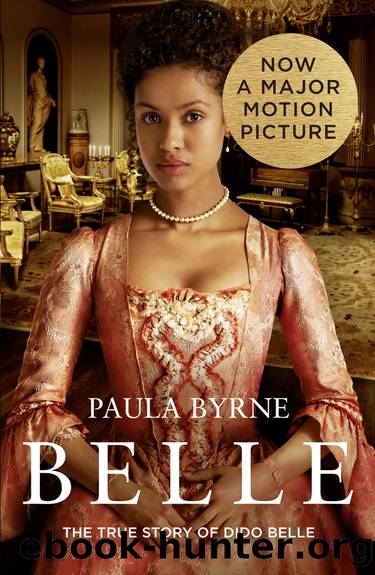
Author:Byrne, Paula
Language: eng
Format: epub
Publisher: HarperCollins Publishers
Published: 2014-03-16T16:00:00+00:00
The state of slavery is of such a nature that it is incapable of being introduced on any reasons, moral or political, but only positive [written] law … it is so odious that nothing can be suffered to support it but positive law. Whatever inconveniences, therefore, may follow from a decision, I cannot say this case is allowed or approved by the law of England, and therefore the black must be discharged.16
Later critics have argued that the ruling was partial and limited, but there is no doubt that in the courtroom at that moment the victor was James Somerset. Mansfield had done the unthinkable. Somerset was a free man.
Whatever the precise wording, there is no question that this was one of the most significant rulings in English legal history. Granville Sharp and his followers were ecstatic, and certainly viewed it as a victory. But Benjamin Franklin, who was in court that day, was scathing about ‘the hypocrisy of this country, which encourages such a detestable commerce by laws for promoting the Guinea trade; while it piqued itself on its virtue, love of liberty, and the equity of its courts, in setting free a single negro’.17
The newspapers recorded a poignant aftermath. In the pregnant silence that followed Mansfield’s words, the ‘Negroes in Court … bowed with profound respect to the judges and shaking each other by the hand, congratulated themselves upon their recovery of the rights of human nature and their happy lot that permitted them to breathe the free air of England’.18
The wider black community was triumphant, and a ball was held for two hundred at a public house to celebrate the victor. A toast was made to Lord Mansfield.
Meanwhile, the sugar planters were furious. One Jamaican planter predicted that hordes of slaves would immediately make their way to England, copulate with lower-class women, and ‘mongrelise’ the English so that they would eventually look dark-skinned like the Portuguese.19
The press reported that Mansfield had outlawed slavery in England. The Morning Chronicle spoke of how slaves could now ‘breathe the free air of England’. This would become an essential part of the rhetoric of the abolition movement. William Cowper, in his widely read 1785 poem The Task, invoked the image:
Download
This site does not store any files on its server. We only index and link to content provided by other sites. Please contact the content providers to delete copyright contents if any and email us, we'll remove relevant links or contents immediately.
Cecilia; Or, Memoirs of an Heiress — Volume 2 by Fanny Burney(31959)
Cecilia; Or, Memoirs of an Heiress — Volume 3 by Fanny Burney(31945)
Fanny Burney by Claire Harman(26607)
We're Going to Need More Wine by Gabrielle Union(19053)
Plagued by Fire by Paul Hendrickson(17417)
All the Missing Girls by Megan Miranda(16050)
Cat's cradle by Kurt Vonnegut(15365)
For the Love of Europe by Rick Steves(14174)
Bombshells: Glamour Girls of a Lifetime by Sullivan Steve(14081)
Leonardo da Vinci by Walter Isaacson(13341)
4 3 2 1: A Novel by Paul Auster(12403)
The remains of the day by Kazuo Ishiguro(9004)
Adultolescence by Gabbie Hanna(8930)
Note to Self by Connor Franta(7673)
Diary of a Player by Brad Paisley(7587)
Giovanni's Room by James Baldwin(7352)
What Does This Button Do? by Bruce Dickinson(6210)
Ego Is the Enemy by Ryan Holiday(5455)
Born a Crime by Trevor Noah(5385)
